
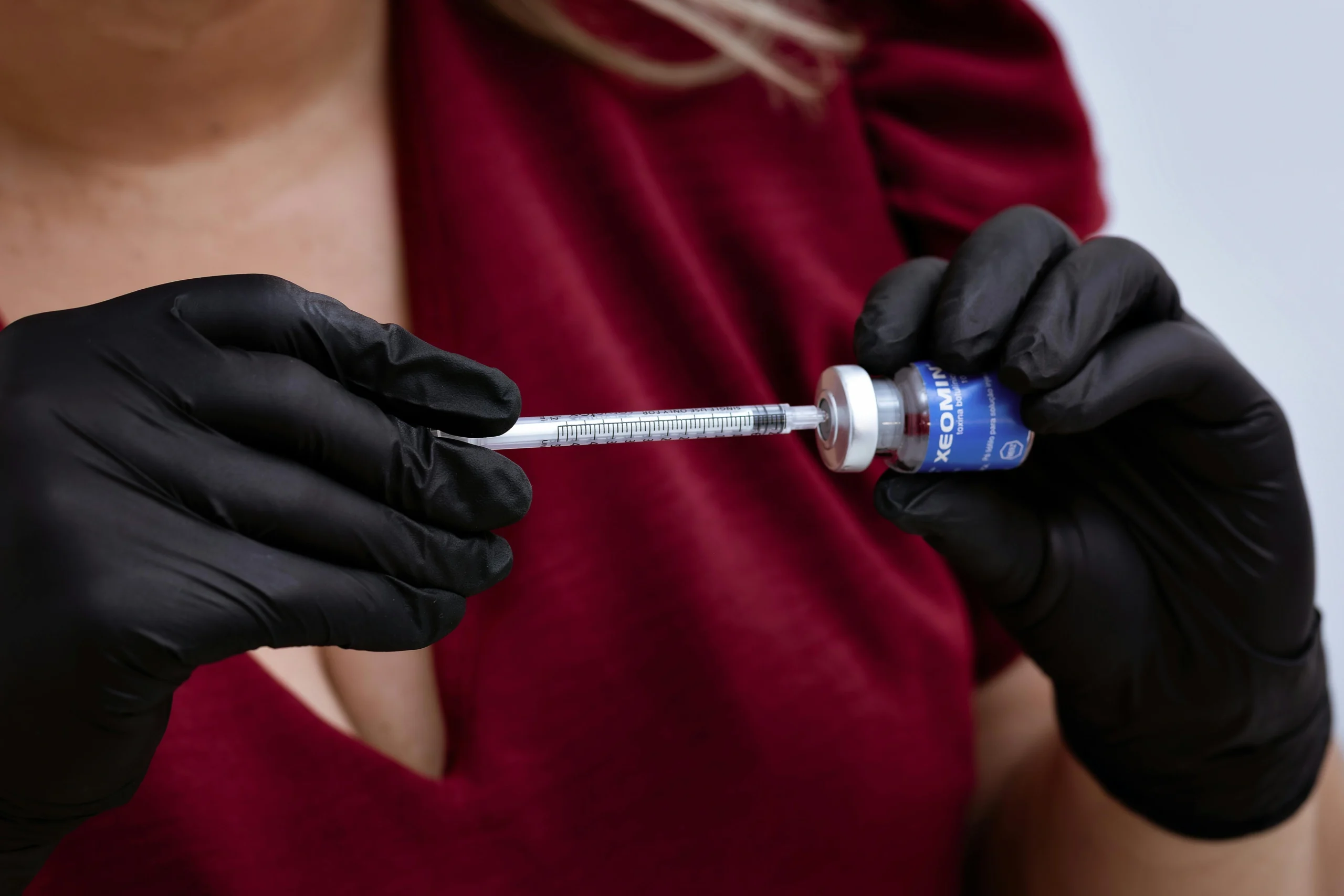
How Many Units of Botox for Forehead Wrinkles? A Simple Guide
Have you ever looked at your forehead lines and wondered, “How many units of Botox do I actually need to smooth this out?”
This is one of the most frequently asked questions among clients in Aurora who are exploring Botox for the first time or fine-tuning an existing treatment plan. The concern is understandable; some patients worry about receiving too many units and ending up with a stiff, expressionless appearance, while others are anxious about under-treatment and seeing little to no visible improvement. Both outcomes are real, and both are avoidable with proper clinical guidance.
The truth is that Botox dosing for the forehead is not standardized across patients. It is a clinically individualized decision informed by your unique facial anatomy, the strength and mass of your frontalis muscle, the depth and distribution of your wrinkle patterns, your skin condition, and the aesthetic outcome you are hoping to achieve. Understanding the clinical reasoning behind dosing decisions can help you approach your consultation with realistic expectations and genuine confidence.
How Many Units Of Botox Are Needed For Forehead Wrinkles?
Most patients require between 10 to 30 units of Botox to treat horizontal forehead wrinkles, though this range is a clinical starting framework rather than a fixed prescription. The appropriate dose for any individual is determined through direct assessment of several anatomical and physiological variables that cannot be accurately evaluated without an in-person consultation.
Lighter, more superficial lines, particularly in younger patients or those pursuing preventative treatment, may respond well to doses at the lower end of this range. Deeper, more established dynamic wrinkles that have developed over years of repeated frontalis muscle contraction typically require higher unit counts to achieve meaningful clinical correction. Men, as a demographic, tend to require doses at or above the upper end of this range due to greater facial muscle mass and stronger neuromuscular activity compared to most women.
Choosing Professional Botox matters enormously in this context. An experienced, anatomy-informed injector does not apply a fixed dose to every forehead; they assess your specific muscle architecture, observe your dynamic facial movements, evaluate skin laxity, and tailor the injection pattern and unit count accordingly. The clinical goal is a forehead that appears smooth and rested while retaining the capacity for natural, expressive movement. Over-treatment compromises expressivity; under-treatment fails to deliver visible results. Precise, individualized dosing is what separates a skilled Professional Botox provider from a provider simply administering a standard protocol.
What is Botox?
Botox is the commercially recognized brand name for onabotulinumtoxinA, a highly purified neurotoxic protein derived from Clostridium botulinum and formulated for medical and cosmetic use in precisely controlled therapeutic doses. It has been studied extensively for decades and holds approval from Health Canada and regulatory agencies worldwide for both cosmetic and medical indications.
At a physiological level, Botox functions by competitively inhibiting the presynaptic release of acetylcholine at the neuromuscular junction, the site where motor nerve endings communicate with muscle fibers. When acetylcholine release is blocked, the targeted muscle loses its ability to contract fully. The overlying skin, no longer being repeatedly folded and compressed by muscular activity, gradually softens, and the appearance of dynamic wrinkles diminishes. This effect is temporary because nerve terminals eventually sprout new acetylcholine-releasing connections, restoring neuromuscular function over a period of months.
In cosmetic practice, Botox is most commonly used to treat dynamic wrinkles in the upper face: horizontal forehead lines driven by frontalis muscle activity, glabellar lines (the vertical “11 lines” between the brows) produced by the procerus and corrugator supercilii muscles, and periorbital crow’s feet resulting from orbicularis oculi contraction. Beyond these core indications, it is also used for brow lifting, bunny lines on the nose, lip lines, chin dimpling, neck bands, jaw slimming, and hyperhidrosis management, among other applications.
Botox also has a well-established record in clinical medicine. It is approved for the prophylactic treatment of chronic migraines, the management of cervical dystonia, upper limb spasticity, blepharospasm, strabismus, and overactive bladder. This broad therapeutic history underscores its safety and efficacy when used by trained practitioners in appropriate clinical contexts.
The enduring popularity of Professional Botox as a cosmetic intervention is rooted in its practicality: treatments are completed in under 30 minutes, require no surgical incisions or anesthesia, involve minimal downtime, and deliver measurable aesthetic results. When dosed and injected with clinical precision, Botox produces a natural, refreshed appearance, not the frozen or artificial look that results from poor technique or excessive dosing.
How Many Units Of Botox Are Typically Used For The Forehead?
The forehead is among the most frequently treated areas in cosmetic medicine, and it is also one of the most technically nuanced regions to inject due to the interplay between the frontalis muscle, the brow depressors, and the need to preserve natural brow height and movement.
Average Unit Range
Clinical practice and published aesthetic guidelines generally place the forehead treatment range at 10 to 30 units of Botox, with the specific dose calibrated to the individual patient.
Patients with mild, early-stage forehead lines, including younger patients pursuing preventative treatment to delay the progressive deepening of dynamic wrinkles, may respond well to 10 to 15 units. This lower-dose approach relaxes the frontalis sufficiently to soften lines without significantly limiting forehead movement. Patients with moderate forehead wrinkles and typical muscle tone generally fall within the 15 to 25 unit range, which provides clinically meaningful smoothing while preserving a degree of natural expressivity. Patients with deep, well-established wrinkles, high frontalis muscle mass, or strong resting muscle tone may require 25 to 30 units or more to achieve adequate and lasting correction.
It is worth noting that the frontalis muscle must be treated conservatively in relation to the brow depressor muscles. If the frontalis is over-relaxed without appropriate attention to the glabellar depressors, the net effect can be brow ptosis, a downward drooping of the brow that creates a heavy, fatigued appearance. This is one of the most common complications of poorly planned forehead Botox and underscores why dosing must be considered in the context of the full upper facial anatomy, not the forehead in isolation.
Differences Between Individuals
Patient-to-patient variability in forehead Botox dosing is substantial and clinically meaningful. Individuals with greater frontalis muscle bulk, common in men and in patients who habitually use their forehead expressively, require more units to achieve equivalent relaxation compared to patients with smaller, less active muscle groups. Men typically require doses at the higher end of or above the standard range; clinical studies suggest that male patients may need 20 to 40 units for adequate forehead treatment, compared to 10 to 20 units for many female patients with comparable wrinkle severity.
Age also introduces variability. Younger patients with dynamic-only wrinkles (lines that are visible during expression but not at rest) typically respond well to lower doses. Older patients with static wrinkles (lines visible at rest, independent of muscle activity) may require higher doses, and they should also understand that Botox addresses the dynamic muscular component of wrinkle formation; it does not reverse static wrinkles caused by collagen loss, volume depletion, or chronic skin laxity, which may benefit from complementary treatments.
First-time patients are often best served by a conservative starting dose, allowing the provider to assess individual response before committing to a higher unit count. This “start low, adjust higher” approach reduces the risk of over-treatment and allows for a gradual calibration of dosing that reflects how a specific patient’s muscles and skin respond to the neurotoxin.
Why Customization Matters
The clinical rationale for individualized dosing is straightforward: the forehead is a highly visible, expressively active region of the face. Deviations from optimal dosing, in either direction, produce objectively suboptimal outcomes. Too few units result in incomplete muscle relaxation, leaving residual wrinkle activity and shortening the effective duration of treatment. Too many units paralyze the frontalis excessively, producing the stiff, artificially immobile forehead appearance that patients most commonly cite as a fear associated with Botox.
Professional Botox, as practiced at medically supervised clinics, is defined precisely by this commitment to balance. The clinical objective is a forehead that looks naturally smooth and well-rested, with the capacity for authentic emotional expression intact. Achieving that balance consistently requires provider expertise, careful pre-treatment assessment, and a willingness to adjust protocols based on individual response over successive treatments.
Factors That Affect How Many Units You Need
Determining the appropriate Botox dose for any patient’s forehead is a multifactorial clinical assessment. The following variables each contribute meaningfully to the final dosing decision.
Muscle Strength
The frontalis muscle varies considerably in mass, fiber density, and contractile strength across individuals. Patients with a hypertonic (overactive) frontalis, which may manifest as deeply grooved horizontal lines even at rest and vigorous brow elevation during expression, require substantially more units to achieve adequate relaxation. Conversely, patients with lower baseline muscle tone may respond to smaller doses and are at greater risk of brow ptosis if standard doses are applied without individual assessment. Muscle strength is evaluated during consultation through observation of dynamic facial movements and, in some cases, gentle palpation of the forehead musculature.
Depth Of Wrinkles
The clinical depth and character of forehead wrinkles provide important dosing guidance. Fine, superficial lines that appear primarily during animation (dynamic wrinkles) respond well to moderate neuromuscular blockade at standard or lower doses. Deeper, etched-in lines that are visible at rest (static wrinkles) indicate long-standing, repeated muscle activity and typically require higher unit counts to produce visible improvement. In patients with significant static wrinkling, providers may also discuss whether adjunctive treatments, such as dermal fillers for volume restoration or skin resurfacing for surface texture, may complement the effects of Botox.
Age And Skin Condition
Skin biology changes substantially with age. Younger skin has greater collagen density, improved elasticity, and stronger recoil capacity, allowing it to smooth more readily following muscle relaxation with Botox. As patients age, declining collagen production, reduced elastin integrity, and cumulative photodamage diminish the skin’s ability to respond to neuromuscular treatment alone. Older patients may require higher doses to achieve clinically meaningful wrinkle reduction, and their overall treatment plan may incorporate additional modalities to address skin quality alongside dynamic muscle activity.
Desired Results
Patient treatment goals exist on a spectrum and should be explicitly discussed during consultation. Patients who prefer a subtle, natural-looking reduction in forehead animation, preserving visible but softened expression, will receive a different dosing strategy than patients who desire a more complete smoothing of forehead lines with minimal residual movement. Neither preference is clinically inappropriate, but the provider must understand the patient’s aesthetic intentions clearly in order to select a dose that aligns with those goals while remaining within safe clinical parameters.
First-Time Vs Returning Treatments
For patients receiving Botox for the first time, a conservative initial dose is typically the most prudent approach. This allows the treating provider to observe how the patient’s specific muscle groups respond to the neurotoxin, evaluate the aesthetic outcome at the two-week follow-up, and make informed dosing adjustments for subsequent treatments. Returning patients benefit from cumulative treatment data, prior dosing records, response patterns, duration of effect, and patient-reported satisfaction, which allow for increasingly precise and consistent outcomes over time. Patients who have maintained regular Professional Botox treatments over multiple years often find that their optimal dose stabilizes, and in some cases decreases, as habitual muscle relaxation reduces overall frontalis activity between sessions.
How Often Should You Get Botox?
Because Botox produces a temporary neuromuscular effect, ongoing maintenance treatments are required to sustain aesthetic results.
Typical Schedule
The standard clinical recommendation for Botox maintenance is every three to four months, reflecting the typical duration of neurotoxin effect before muscle function begins to meaningfully return. For most patients, this interval provides continuous wrinkle reduction without excessive gaps between treatments. Allowing results to fully wear off before returning for treatment permits dynamic wrinkle patterns to fully re-establish, which can progressively deepen static lines over time and may require incrementally higher doses to re-achieve correction.
Why Consistency Matters
Consistent Botox maintenance produces compounding aesthetic benefits beyond simple wrinkle reduction. Repeated, regular relaxation of the frontalis muscle reduces the frequency and intensity of the repetitive folding forces that drive progressive wrinkle deepening. Over time, patients who maintain regular Professional Botox schedules often report that their wrinkles appear less pronounced even in the intervals between treatments, a reflection of reduced cumulative mechanical stress on the overlying skin. Additionally, regular treatments allow the provider to monitor subtle changes in facial anatomy, aging patterns, and muscle behavior, enabling proactive adjustments to the treatment protocol that maintain consistently natural-looking outcomes.
Personalized Timing
While the three-to-four-month guideline applies to most patients, individual treatment intervals should be personalized based on several physiological and lifestyle factors. Patients with faster metabolic rates, including those who engage in frequent high-intensity physical exercise, may experience earlier return of muscle function and benefit from scheduling treatments at the shorter end of this interval. Patients with slower metabolisms or lower baseline muscle activity may find their results persisting closer to the four-month mark or beyond. The treated area also matters: highly active muscle groups, such as the frontalis in habitually expressive individuals, may recover function more quickly than less engaged muscles. Through ongoing clinical dialogue, Professional Botox providers at TrustyMed Clinic help each patient identify the treatment cadence that best sustains their individual results.
How Long Should Botox Last?
The duration of the Botox effect is one of the most common topics patients raise in both initial consultations and follow-up appointments. Understanding what drives longevity, and what can diminish it, helps patients set realistic expectations and plan their treatment schedules accordingly.
What To Expect
Following injection, patients typically begin to notice the first signs of muscle relaxation within two to five days, as the neurotoxin progressively cleaves SNAP-25 proteins at the neuromuscular junction, impairing acetylcholine vesicle docking and release. This onset is gradual rather than immediate. Full clinical effect, the maximum degree of muscle relaxation achievable from the administered dose, is generally reached between one and two weeks post-treatment. At this point, a follow-up assessment is often recommended to evaluate the symmetry and extent of results and determine whether any targeted touch-up injections would optimize the outcome.
Results then remain relatively stable through the first one to two months before gradually diminishing as the body responds to neurotoxin-induced blockade through axonal sprouting, a process in which motor nerve terminals generate new acetylcholine-releasing connections that progressively restore neuromuscular function. By the three-to-four-month mark for most patients, muscle activity has substantially returned, and wrinkle recurrence becomes visible, signaling that the next treatment cycle is approaching.
What Affects Longevity
The duration of Botox results is influenced by a combination of patient-specific and treatment-related variables. Basal metabolic rate is among the most significant physiological determinants; patients with elevated metabolic activity process and clear the neurotoxin more rapidly, resulting in an earlier return of muscle function. Regular high-intensity aerobic exercise similarly accelerates neurotoxin clearance through increased local tissue perfusion and systemic metabolic demand, and highly active patients may find their results fading four to six weeks earlier than average.
The treatment area itself contributes to duration variability. Muscles with high baseline contractile activity, such as the frontalis in an expressively animated patient, experience more frequent neuromuscular signaling challenges that may accelerate functional recovery. Less frequently engaged muscles tend to retain the effects of neuromuscular blockade for longer intervals. Dosing precision is also a critical determinant of longevity: a precisely dosed and correctly injected treatment produces more complete and durable muscle relaxation than an underdosed or imprecisely placed injection. This is a primary reason why choosing Professional Botox from a skilled, experienced provider directly impacts not just the quality but also the duration of your results.
What Happens If You Get Too Much Or Too Little Botox?
Dosing accuracy is foundational to a successful Botox outcome. Both over-treatment and under-treatment carry distinct clinical consequences that reinforce the importance of working with an experienced Professional Botox provider.
Too Much Botox
Excessive Botox in the forehead region produces a constellation of undesirable clinical outcomes. The most immediately apparent is the loss of natural forehead mobility; the frontalis becomes so thoroughly paralyzed that the patient is unable to raise their eyebrows, creating a flat, expressionless upper face that most patients find aesthetically distressing. In more pronounced cases, or when the injection pattern fails to adequately account for the relationship between the frontalis and the brow depressors, brow ptosis can occur, the brow descends below its natural resting position, creating a heavy, tired appearance that can also reduce the effective aperture of the upper visual field. Spock brow deformity, where the lateral brow elevates while the medial brow remains depressed due to uneven muscle relaxation, is another recognized complication of imprecise or excessive dosing. These outcomes, while temporary, can persist for several months before muscle function recovers and may significantly impact patient satisfaction and quality of life during that interval.
Too Little Botox
Insufficient dosing presents its own clinical limitations. When the administered dose fails to produce adequate frontalis relaxation, the patient observes little to no visible improvement in forehead wrinkle depth, a frustrating outcome following an investment of time and money. Partial muscle relaxation may also produce uneven results, with some regions of the forehead softening more than others due to variability in local neurotoxin distribution, creating an asymmetric or patchy appearance. Underdosed treatments also tend to have shorter effective durations, as incomplete neuromuscular blockade resolves more rapidly than a well-established, full-dose relaxation. These outcomes drive patients to seek corrective treatments sooner, increasing their overall treatment frequency and cost.
Why Proper Dosing Matters
The clinical consequences of both over- and under-treatment underscore a fundamental principle: Botox dosing is a medical skill, not a simple product-dispensing task. The right dose for your forehead is the dose that achieves your aesthetic goals within the anatomical and physiological context of your specific facial structure. Professional Botox providers develop this dosing precision through formal training, clinical experience, ongoing education, and, critically, the time invested in a proper pre-treatment consultation and post-treatment assessment. At TrustyMed Clinic, our commitment to individualized dosing ensures that every patient receives a treatment protocol calibrated to their unique needs and designed to deliver balanced, natural-looking, and clinically appropriate results.
Why Choose Trustymed Clinic’s Services?
Choosing where to receive Botox treatment is a decision that extends well beyond comparing price lists. The clinical expertise of the provider, the thoroughness of the consultation process, the quality of post-treatment support, and the overall patient experience are all factors that directly influence the safety, quality, and longevity of your results.
At TrustyMed Clinic, every patient begins with a comprehensive aesthetic consultation that goes beyond simply counting wrinkles. We conduct a detailed assessment of your facial anatomy, including evaluation of muscle strength and activity patterns, skin quality and elasticity, brow position and asymmetry, and the interplay between treatment areas. We review your medical history, discuss any medications or supplements that may affect treatment, and ensure that Botox is clinically appropriate for your circumstances. Only after this thorough assessment do we develop a customized treatment plan designed specifically for your face and your goals, not a generic protocol applied uniformly to every patient.
Our injection technique is guided by current anatomical research and a commitment to precision. We use carefully mapped injection points tailored to your individual muscle architecture to minimize the risk of complications such as brow ptosis or asymmetry, and to maximize the natural quality of your results. Following treatment, we offer follow-up assessments to evaluate outcomes, address any patient concerns, and make minor adjustments where clinically appropriate.
We believe that Professional Botox should never announce itself. The best aesthetic outcome is one that leaves you looking naturally refreshed, confident, and entirely like yourself, only with smoother, more rested skin.
Final Thoughts
There is no universal answer to how many units of Botox are right for your forehead. The appropriate dose is a clinically individualized determination shaped by your muscle anatomy, wrinkle depth, skin condition, aesthetic goals, and treatment history. What matters most is not arriving at a specific number in advance, but rather working with a qualified Professional Botox provider who can assess all of these variables accurately and develop a treatment plan designed to achieve balanced, natural-looking results that are right for your face.
Botox is not about altering your appearance or erasing the signs of a life well-lived. It is about enhancing the features you already have, helping you look as rested, refreshed, and confident on the outside as you feel on the inside.
Let’s Find the Right Treatment for You
If you are wondering how many units your forehead may need, or if you simply want a professional, personalized assessment before committing to treatment, our team at TrustyMed Clinic is here to help. We take the time to understand your goals, evaluate your anatomy, and recommend a treatment plan that fits your comfort level, your lifestyle, and your vision for your results. Schedule a consultation today and let us build a plan that works for you.
Follow us on our social media pages below:
Check out more of our articles below: