How Much Is Botox in 2026? A Complete Cost Guide
Have you ever looked into Botox pricing and wondered why the numbers seem to vary so much from one clinic to another?
This is one of the most common questions asked by clients in Aurora who are considering Botox for the first time or thinking about continuing their treatments. The confusion is understandable. One clinic charges per unit, another charges per treatment area, and the price points can differ significantly. Naturally, you want to know what you are really paying for, how those costs are determined, and whether the investment is worth it from both a clinical and cosmetic standpoint.
How Much Is Botox In 2026?
In 2026, the cost of Botox typically ranges from $8 to $15 per unit in Canada, depending on the clinic, the provider’s qualifications, and the treatment area. Most patients require between 20 and 60 units per session, which means total session costs can range from $200 to $800 or more. Some clinics charge by area instead of by unit, with per-area pricing often starting around $250.
The exact cost for any individual patient depends on several clinical variables, including facial muscle mass and strength, the depth and severity of existing wrinkles, the number of treatment areas, and the patient’s desired aesthetic outcome. These factors are assessed during an initial consultation, which is a critical step in any Professional Botox protocol.
It is important to understand that Botox is not a commodity product where price alone should drive your decision. The qualifications of the injecting practitioner, the dosing accuracy, and the clinical environment all directly affect both the safety and the quality of your results. Lower prices may reflect less experienced providers, diluted formulations, or substandard injection practices, all of which carry real clinical risks. Understanding how Botox is priced empowers you to make a more informed decision and ensures you receive treatment that is both effective and medically appropriate.
What is Botox?
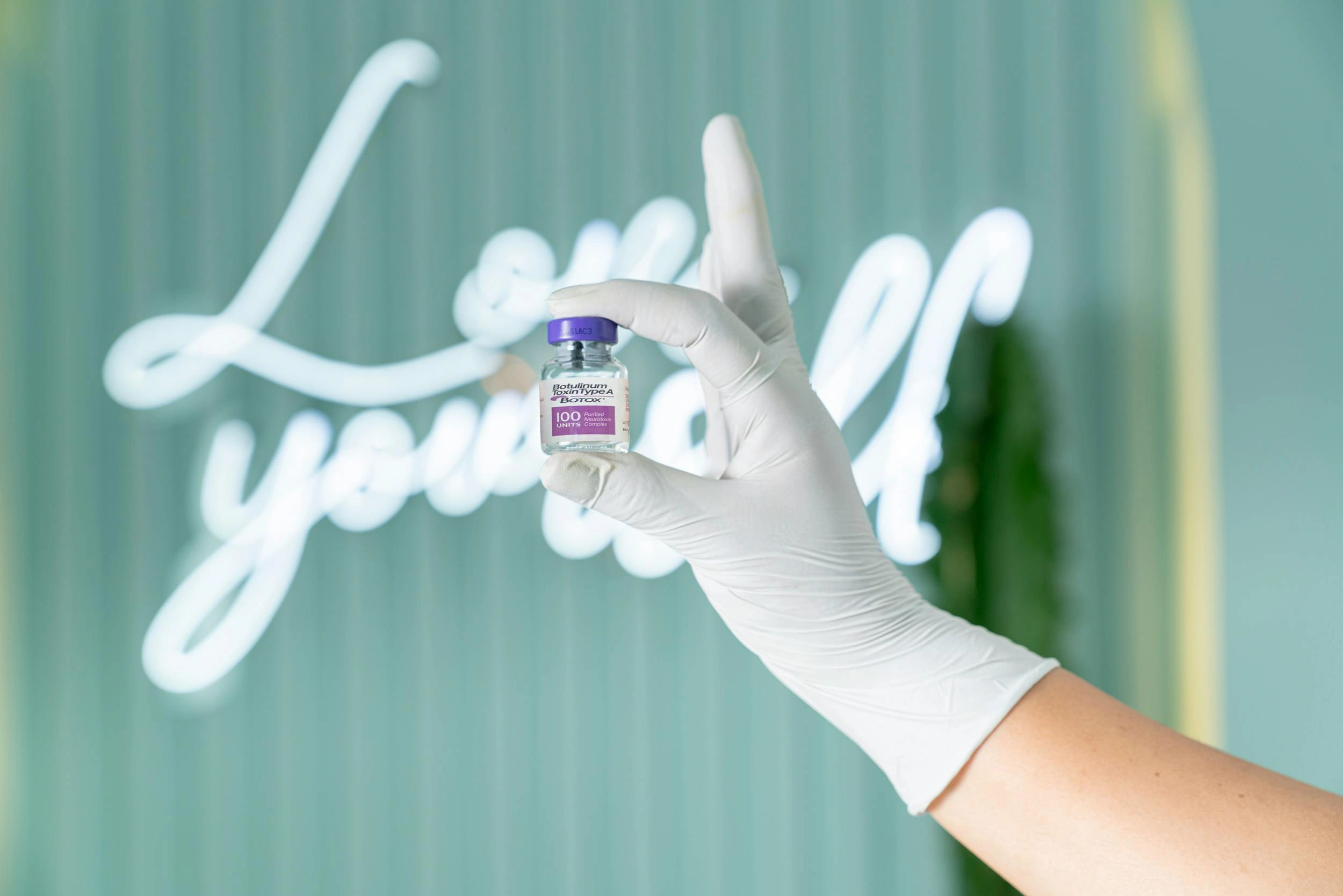
Botox is the brand name for onabotulinumtoxinA, a purified neurotoxic protein derived from Clostridium botulinum. When used in medical and cosmetic settings, it is formulated in highly controlled, therapeutic doses that are safe and well-studied.
Botox works by temporarily blocking the release of acetylcholine at the neuromuscular junction, the chemical messenger responsible for triggering muscle contractions. When this signal is interrupted, the targeted muscle is unable to contract fully, which softens the overlying skin and reduces the appearance of dynamic wrinkles, those caused by repetitive facial movements like squinting, frowning, or raising the eyebrows.
Common cosmetic treatment areas include the horizontal forehead lines produced by frontalis muscle activity, the glabellar lines (also called “11 lines” or frown lines) caused by the procerus and corrugator supercilii muscles, and the periorbital lines around the eyes commonly known as crow’s feet, which develop from repeated contraction of the orbicularis oculi muscle.
Beyond cosmetics, Botox has a long history of medical applications, including treatment for chronic migraines, hyperhidrosis (excessive sweating), cervical dystonia, blepharospasm, and overactive bladder, evidence of its well-established safety profile when administered by trained clinicians.
Botox remains popular as a cosmetic intervention because it is non-surgical, requires no recovery time, can be completed in under 30 minutes, and delivers measurable results. When administered by a skilled injector using appropriate dosing, Professional Botox produces a natural, refreshed appearance rather than a “frozen” or expressionless look.
What Affects The Cost Of Botox?
Botox pricing is highly individualized. Multiple clinical and logistical factors determine what a patient will pay for their treatment.
Cost Per Unit Vs Per Area
Clinics typically use one of two pricing models. Per-unit pricing charges based on the exact number of Botox units injected, providing a transparent, precise cost that scales with your individual anatomical needs. Per-area pricing charges a flat rate for each region treated, regardless of how many units are used within that region.
Per-unit pricing is generally considered more clinically transparent because it directly reflects the quantity of product administered. This model rewards patients who require fewer units and ensures they are not overpaying for unused product. Per-area pricing can simplify billing, but may result in patients receiving a standardized number of units that does not account for their specific muscular anatomy.
Number Of Units Required
The number of units required for a given treatment is not arbitrary; it is determined by clinical assessment of several patient-specific factors. These include the size and strength of the target muscle group, the depth and distribution of existing wrinkle patterns, baseline facial symmetry, and the patient’s treatment goals (conservative softening versus more pronounced relaxation).
As a clinical reference, Health Canada-approved dosing guidelines suggest the following general ranges for common treatment areas: the glabellar complex typically requires 20 units, the forehead generally needs 10 to 20 units, and each side of the crow’s feet area may require 12 to 24 units. These ranges serve as starting points and are adjusted based on individual patient assessment.
Treatment Area
Each anatomical treatment area has its own dosing requirements based on the underlying musculature. Larger or more active muscle groups require higher doses to achieve adequate relaxation. The masseter (jaw) muscle, for example, used in jaw slimming and bruxism management, may require 40 to 60 units per side. The forehead, which contains the broad frontalis muscle, typically requires a moderate number of units but must be dosed carefully to avoid brow ptosis (drooping). Crow’s feet, by contrast, typically require fewer units due to the smaller muscle surface area. Treating multiple areas in a single session increases the total unit count and therefore the total cost, though some clinics offer multi-area pricing packages.
Provider Experience
The credentials and clinical experience of your Botox injector are among the most important factors, not just for pricing, but for patient safety and outcome quality. Highly trained providers, such as licensed physicians, nurse practitioners, or registered nurses with advanced aesthetic training, develop the anatomical knowledge and injection precision required to deliver consistent, natural-looking results.
Experienced practitioners are able to customize dosing based on subtle anatomical variables, recognize and avoid neurovascular structures, and manage complications if they arise. While their services may carry a premium, this reflects the value of medical expertise and the reduced risk of adverse outcomes. Choosing Professional Botox means prioritizing these clinical standards over cost alone.
Clinic Location
Geographic location influences pricing through a combination of market demand, overhead costs, and the professional credentials of available practitioners. Clinics in urban centres or medically reputable regions like Aurora may price services to reflect the quality standards, training investments, and patient experience they offer. Price disparities across regions can also reflect differences in provider qualifications and the level of post-treatment support available.
How Much Does 20 Units Of Botox Cover?
One of the most frequently asked questions in aesthetic consultations is what 20 units of Botox can realistically accomplish.
Common Uses For 20 Units
Twenty units is a clinically meaningful starting quantity. Depending on the individual patient’s anatomy, 20 units may be sufficient to treat the glabellar complex (frown lines) on its own, achieve a mild-to-moderate softening of forehead lines, or provide targeted relaxation of crow’s feet on both sides. For patients with less pronounced muscle activity or lighter wrinkling, 20 units may be adequate for a single-area treatment. For patients with stronger musculature or deeper dynamic lines, 20 units may represent a partial treatment that produces subtle rather than full correction.
Why It Varies
The variability in outcomes from a fixed number of units reflects fundamental differences in individual anatomy. Patients with naturally stronger facial musculature, which is influenced by genetics, age, and habitual facial expression patterns, require greater quantities of neurotoxin to achieve equivalent levels of muscle relaxation compared to patients with lower baseline muscle tone. Similarly, patients with deeper, more established dynamic wrinkles may require higher doses to produce visible softening at the skin surface.
This is why a thorough in-person consultation is a non-negotiable component of any Professional Botox treatment plan. Photographs, facial movement analysis, and muscle palpation allow the provider to accurately estimate the appropriate unit count before any product is administered, reducing the likelihood of under-treatment or over-treatment.
How Often Should You Get Botox?
Botox is a temporary treatment with results that diminish as the neuromuscular blockade naturally resolves over time. Maintenance requires a consistent treatment schedule tailored to the individual.
Typical Schedule
Most patients require Botox injections every three to four months to maintain continuous aesthetic results. This interval aligns with the typical duration of neurotoxin effect before muscle function begins to return. Waiting until results have completely faded before returning for treatment can allow dynamic wrinkles to re-establish, potentially requiring higher doses to achieve the same correction.
First-Time Vs Regular Users
First-time Botox patients may notice their results fading slightly sooner than expected. This is a well-documented phenomenon; initial treatments help establish a “baseline” of muscle relaxation, and with consistent, regular treatments, patients often find that results extend progressively. Over time, habitual relaxation of treated muscles may contribute to reduced wrinkle depth even between treatments, as the skin is no longer being repeatedly folded and creased.
Why Consistency Matters
Regular treatments support a cumulative benefit that extends beyond simple cosmetic maintenance. Consistent neuromuscular relaxation can gradually reduce the overall depth of dynamic wrinkle lines, and some evidence suggests that long-term Botox use may slow the progression of certain age-related changes in treated areas. From a preventive standpoint, younger patients who begin Professional Botox before deep lines are established may reduce the likelihood of requiring more aggressive corrective treatments later. The clinical goal is not to eliminate expression, but to maintain a balanced, refreshed appearance with careful, proportionate dosing.
How Long Should Botox Last?
Botox results are temporary by nature, with the duration of effect varying based on a combination of physiological and treatment-related factors.
What To Expect
After injection, most patients begin to notice the onset of muscle relaxation within two to five days, as the neurotoxin progressively inhibits acetylcholine release at treated nerve terminals. Full clinical effect is generally reached between one and two weeks post-treatment, at which point the provider may offer a follow-up assessment to evaluate results and determine whether any minor touch-up adjustments are warranted. Results then gradually diminish over the following months as nerve terminals regenerate and muscle function slowly returns. Full resolution typically occurs by the three-to-four-month mark, though individual timelines vary.
What Affects Longevity
Several patient-specific and treatment-related factors influence how long Botox effects persist. Metabolic rate is one of the most significant variables; patients with higher basal metabolic activity tend to break down the neurotoxin more rapidly. Physical activity level also plays a role; high-intensity exercise increases local circulation and metabolic turnover, potentially shortening the duration of effect. The treatment area matters as well, as smaller or less frequently engaged muscles tend to retain effects longer than highly active muscle groups. Finally, the accuracy of dosing and injection technique directly affects outcome quality and duration. Under-dosing may produce shorter-lived and less complete results, while precise, anatomy-informed dosing from a skilled Professional Botox provider maximizes both the quality and longevity of the outcome.
Is Cheaper Botox Worth It?
In any medical aesthetic market, lower price points attract attention, but cost-cutting in clinical settings carries a genuine risk that patients should understand before making a decision based on price alone.
Potential Downsides
Sub-standard Botox treatments can result in a range of adverse outcomes. Incorrect dosing, whether too much or too little, can produce uneven results, brow ptosis, asymmetry, or paradoxically worsened muscle activity in surrounding areas. Poor injection technique by inadequately trained providers increases the risk of bruising, swelling, migration of the neurotoxin to unintended muscle groups, and failure to achieve the desired aesthetic effect. In some cases, patients who receive low-cost Botox from unregulated providers report outcomes that require corrective procedures, ultimately costing more than a quality treatment would have from the outset.
It is also worth noting that not all Botox products on the market are equivalent. Counterfeit or improperly stored neurotoxins have been documented in the medical literature and present serious safety concerns. Reputable, medically overseen clinics source their product through licensed pharmaceutical channels and maintain strict cold-chain storage protocols to preserve product integrity.
Why Quality Matters
Botox is a Health Canada-regulated prescription medication, not a retail cosmetic product. As such, its administration constitutes a medical procedure and carries corresponding responsibilities for both the provider and the patient. Selecting Professional Botox from a credentialed, medically supervised clinic ensures that your treatment is grounded in clinical assessment, uses properly sourced and stored product, and is performed with the anatomical knowledge required to achieve natural, safe, and lasting results. In the context of medical aesthetics, quality is not a luxury; it is a clinical standard.
Why Choose Trustymed Clinic’s Services?
Selecting the right clinic is as important as deciding to pursue Botox treatment. At TrustyMed Clinic, we approach every patient interaction with the same commitment to clinical excellence, personalized care, and patient education that defines responsible medical aesthetics practice.
Our intake process begins with a detailed consultation during which we assess your facial anatomy, review your aesthetic goals, discuss your medical history, and explain realistic outcome expectations. This assessment informs a customized treatment plan designed specifically for your facial structure and concerns, not a one-size-fits-all protocol. Our injectors apply precise, anatomy-guided techniques to ensure natural-looking, balanced results that enhance your features without altering your fundamental appearance. Post-treatment, we provide ongoing support, follow-up assessments, and guidance on maintaining your results over time.
At TrustyMed Clinic, we believe Professional Botox should improve your confidence and support your wellbeing, not change who you are.
Final Thoughts
Botox pricing can appear complex at first, but a clear understanding of the variables that influence cost allows patients to approach treatment decisions with greater confidence and clarity. The total investment depends on the number of units required, the areas being treated, and the experience level of the provider, all factors that are best evaluated through a professional clinical consultation.
While cost is a legitimate consideration, the real value of Botox lies in the quality of the outcome: results that are safe, natural, appropriately dosed, and tailored to your individual anatomy. Choosing Professional Botox from a reputable, medically supervised clinic is the most reliable way to ensure your treatment meets those standards.
Let’s Find the Right Treatment for You
If you are curious about Botox pricing or want to understand what treatment approach would be most appropriate for your specific concerns, our team is here to help. Book a consultation with TrustyMed Clinic, and we will work together to develop a plan that aligns with your goals, fits your comfort level, and supports your long-term aesthetic health.
Follow us on our social media pages below:
Check out more of our articles below: